

6 Tips for Launching a Superhero Universe (from the Creators of Summit Comics)
So you want to launch a new superhero universe, do you? Here are some things to think about before you unleash it to the world!

Launching a brand-new superhero universe is one of the most exciting things an indie creator can attempt. Heck, most of us have one (or many) superhero universes that we’ve completely invested in, have loved for years, and may be what inspired us to start creating in the first place.
Selling a universe is different than simply selling a comic.
You’re selling trust, vision, and a promise that this world will still exist a year from now.
On a recent ComixLaunch podcast panel, the creators behind Summit Comics pulled back the curtain on how they’re launching a shared creator-owned superhero universe the smart way, with experienced Kickstarter creators, creator ownership, and long-term planning baked in from day one.
Now, as someone who is no stranger to creating comic book universes and has a superhero universe that’s been living in my head for years on Kickstarter right now in EPIC…
QUICK PLUG: JUST 1 DAY LEFT ON KICKSTARTER!

…but despite having created a few superhero universes in my time, I definitely heard some smart ideas in this conversation that more creators should think about when creating a new superhero sandbox… especially if its one you plan on inviting other creators to play in.
6 Tips for Launching a New Superhero Universe

1. Build the Team Before You Build the Universe
Summit didn’t start with a cool logo or a brilliant crossover event idea. It started with relationships built over time, primarily in a creator Discord run by Summit CEO Travis Gibb.
Many of these artists, writers, editors, marketers, and Kickstarter veterans were already working together and building trust in each other long before a shared universe was even proposed.
Pro-tip: A comic universe isn’t held together by lore. It’s held together by people who show up, hit deadlines, and solve problems together.
2. Prioritize Characters and Story Over Merch and Hype
One of the biggest mistakes new universes make is trying to sell the brand before readers care about the characters. “So many people are focused on selling shoes before they’ve even finished a trade,” said Travis Gibb. “We wanted to do it the other way around.”
Summit made a deliberate choice:
No premature merch push.
No crossover chaos.
No “cinematic universe” promises without the books to back them up.
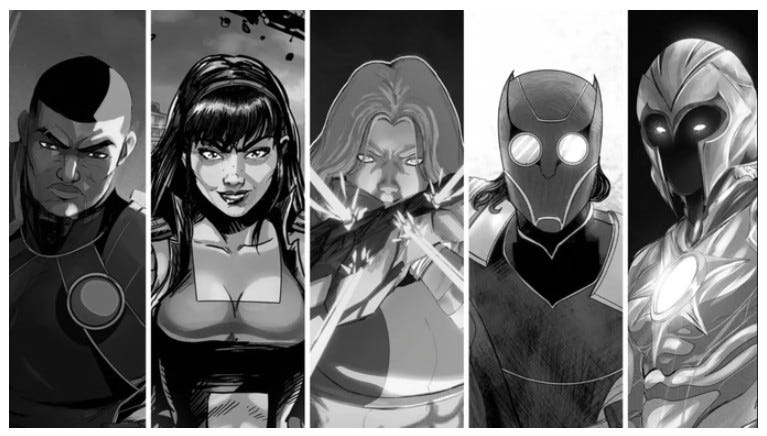
The focus stayed on strong characters, clear origins, and stories worth reading that can all stand on their own.
Pro-Tip: Shoes, hoodies & plushies come later. Story is the foundation.
3. Create a True Jump-On Point
Instead of launching multiple #1s at once, Summit introduced the universe through Summit Pinnacle #1—a curated collection of origin and entry-point stories that launched this week on Kickstarter.

Though anthology projects are not new to Kickstarter, the Summit team sees this debut a little differently. “Some people may call it an anthology, but that’s not what we call it,” said Marcus Jimenez, creator and artist of Killstrike for Summit. “It’s a collection of origins and jumping-on points—similar to DC’s ‘All In.’ It’s the start of a new line.”
Readers can sample the universe without committing to a dozen series and creators get a shared spotlight instead of competing for attention on Kickstarter right out of the gate.
Pro-Tip: Make it easy for new readers to say “Yes, I’ll give your universe a shot.”
4. Protect Creator Ownership (Without Losing Universe Cohesion)
Every creator in Summit owns their characters. At the same time, the universe maintains light editorial guardrails to protect continuity, tone, and brand trust.
“You can run your own brand, your own Kickstarter, your own fulfillment—but you’re connected to something larger,” explains Gibb.
That balance of freedom and structure is what allows different tones (all-ages, mature, noir, mythic) to coexist in the same world.
CJ Hudson, creator of the mature readers superheroine Granite says, “You can tell your story the way you want to tell it, but within a framework of certain guidelines. We don’t want to infringe on that.”
Pro-Tip: Creator ownership leads to freedom and commitment, but having clear universe guidelines provides structure and support.
5. Design for Long-term Growth, but Begin With an Exit Ramp
As a comic fan whose formative years coincided with the birth of Image Comics, I remember how exciting the creative marriage of so many talents uniting to form that universe was. But man, were some of the creative divorces messy!
One of Summit’s smartest moves was thinking through systems for:
Adding new creators
Introducing new characters to the universe
Removing elements cleanly if needed
“We built mechanisms into the universe to add people if they’re a good fit—and to remove them if needed. That’s never really been done before,” said Gibb. Specifically, there is an character in the Summit Universe, Juna, who has the ability to reshape reality. “She’s built to add things and remove things. She’s our fix. That’s intentional.”
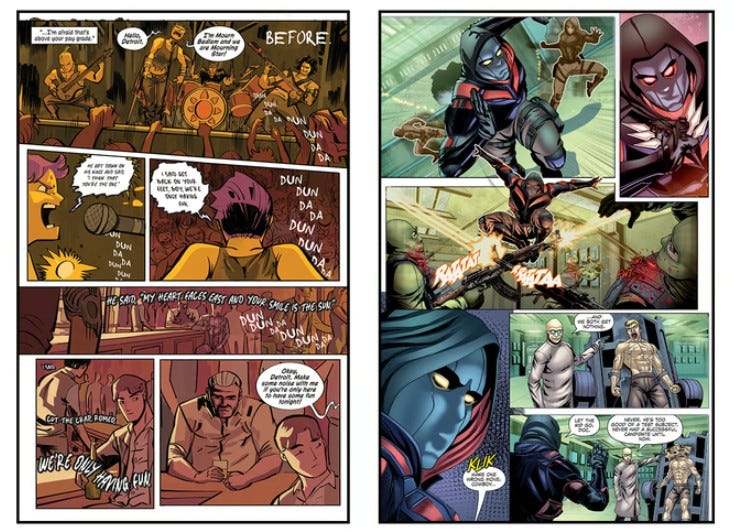
Universes evolve. Creators leave. Projects change. Planning for that early prevents disaster and legal trouble later.
Pro-Tip: If your universe can’t adapt, it won’t survive.
6. Use Kickstarter as a Testing Ground, Not a Crutch
Instead of forcing every creator to immediately fund a solo series, Summit created multiple paths for creators to explore:
Full Kickstarter launches for new series for experienced creators
Shared “Summit Comics Presents” issues to introduce and test new characters in a shorter format
Gradual catalog building before chasing the direct market
An annual Summit Pinnacle launch event to serve as the big universe wide crossover story.
“Pinnacle isn’t just this one thing—we want it to be yearly. It’s our big crossover, our Crisis, our Civil War,” said Gibb.
Pro-Tip: Kickstarter is a proving ground, but there are different launch options to employ strategically.
Launching a superhero universe isn’t about being first to market or even breaking completely new ground. Rather, Summit is showing it’s about being thoughtful, prepared, and obsessively creator-focused.
Summit Comics believes that with the right structure, collaboration, and judicious restraint, indie creators can still build something bold and make it last.
Karla Medrano, who has been tapped to write Pinnacle’s flagship book, Juna, reminds us, “Humility and communication go a long way when you’re building something like this together.”
If you’ve ever dreamed of launching your own universe, this is a solid blueprint.
SOUND OFF IN THE COMMENTS: WHAT WOULD MAKE YOU CHECK OUT A NEW SUPERHERO UNIVERSE?
P.S. One more plug for EPIC #1-5, live on Kickstarter! Laughs, awkward scenes, and lots of dudes and dudettes in costumes punching each other await!

Great show!
Good stuff...definitely saving for later